UFCU UX Research Repository
Information management is essential to the success of any user research team. The user interviews you conduct are only valuable if you are able to effectively pull insights from them. This project taught me that making it easier to find information helps the entire team.
Overview
COMPANY: University Federal Credit Union
ROLES: Research Organization, User Interviews, Information Management, Team Coordinatio
MAIN PROJECTS: Find pain points in the current interview tagging system and create an improved organization for easier access of user feedback
SUPERVISOR: Heather Ashline
TIME FRAME: May 2024 - Aug. 2024
Assignment Details
ASSIGNMENT
"We set up our repository in 2022, and it is in need of review. Our goal with the repository is to make it easy to filter and search by tags for anyone on the UX team. This means we need to make sure we're being consistent with terminology and when tags are applied."
ACTIONABLE PLAN
-
Review tagging system to find pain points and holes in organization.
-
Collaborate with team to align mutual goals and roles within the repository.
-
Develop multiple drafts of the new and improved organization system.
-
Pitch final draft to team and collaborate on final editing.
-
Write definitions of all tags and implement plan directly into the repository.
Original Tagging Organization
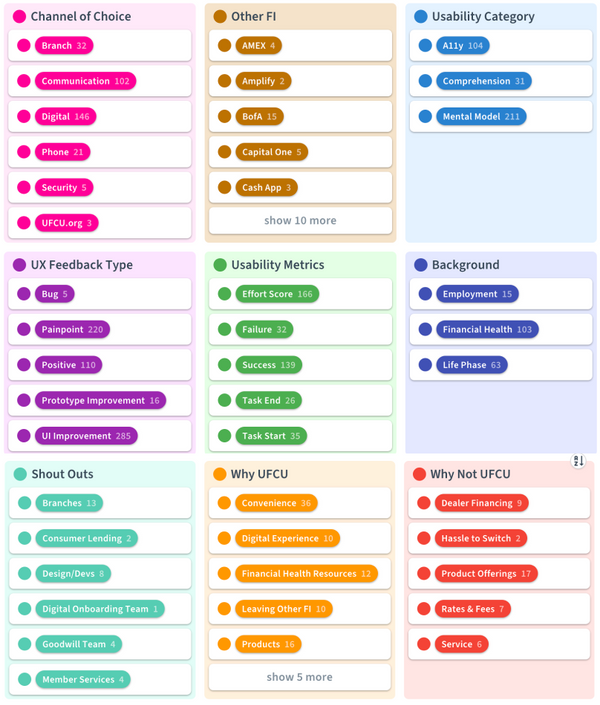
PROS
-
Average of 5 tags per category, concise but can also be a con
-
Description for each tag
-
Effectively highlights necessary metrics for recording
-
Product feedback tags are insightful
CONS
-
User Background category needs expansion
-
Usability categories can be merged
-
Cannot qualify all categories (pain point & positive feedback)
-
Shoutouts tag does not add much insight, can be merged throughout
-
UFCU relationship category is too broad (this was fixed already)
-
Category dedicated to different types of feedback could apply to all
Collaboration
FINDING A SOLUTION THAT WORKS FOR EVERYONE
When approaching the reorganization process, it was essential to create a solution that would make everyone's job easier. Because each person used the repository differently, I had to conduct interviews amongst coworkers and present at meetings to get a multifaceted understanding of how the UX team operates. This in-depth understanding gave me a lot of perspective that aided my organization decisions.


TEAM USES
-
Tammy, Lester and Rick mainly use the repository to tag interview transcripts
-
Heather uses the repository to generate research reports
-
Chris and Kailyn use the repository to inform their design decisions
-
Kara uses the repository for new features, reference for projects and finds info through keywords
Final Draft

CHANGES
-
Merged "Usability Category" and "Usability Metrics" to centralize usability feedback
-
Added "Positive" and "Negative Feedback" categories to qualify user input
-
Added "Account Type", "Primary FI", "Digital Channel Usage" and "ADA" to "User
-
Background" for easier access and organization of basic user info
-
Added "Temporary Issues" category to distinguish between short and long term issues
-
Added "New Tags" category as a temporaryplaceholder for new tags before the team decides where they should go.
Reflection
RESEARCH
-
The professional research process is much more structured and detail-oriented
-
Research serves multiple purposes in a multifaceted team
-
Research informs hyper-specific UX decisions
TEAMWORK
-
Daily meetings help reinforce teamwork and drive collaboration
-
Input and constructive criticism should be open to everyone on the team, regardless of their role
-
Understanding each person’s individual role contributes to proper discussion of ideas and progression of projects
I truly underestimated the significance of research organization before working on this project. Much of my research experience was through class projects that included a few user interviews. The scale of research I had encountered was unlike anything I had seen, which made me eager to fully understand how it can all be organized. I learned a lot about the goals of user research and how it informs design decisions.